Showing posts with label pancakes. Show all posts

Saturday, March 19, 2011

Pineapple: Sinful Pancakes

OLYMPUS DIGITAL CAMERA         Every March 1 the International House of Pancakes hosts National Pancake Day when they give away free pancakes. I’ve never been, but it’s a nice idea. National Pancake Day coincides, roughly, with Shrove Tuesday, a day of indulgence prior to atoning for one’s sins, by fasting, during Lent. Or so I’ve heard, being pretty much of a heathen myself. Fasting is not part of my moral outlook.

Nevertheless, I do like the idea of indulging in pancakes, so on March 1 I joined the party by making pancakes at home. Yes, it’s taken me that long to get around to writing this. It’s not that I’m not thinking about it, or not cooking and taking photos; it’s the sitting down to put it together that takes so much time. Thankfully, photos will wait.

I love pancakes, as other pancake posts on this site attest. I just counted them, and there are four: here, here, here, and here. (And that doesn’t even include the posts on thick and thin johnnycakes.) Since I try not to repeat myself too much (this gets harder as we get older, as we all know), that tally of posts is an indication of just how much I do love the fried little disks. I’d eat them every day, occasionally interspersed with French Toast (I really should do an entry on that) if I could. Or rather, if I didn’t think it would be better for me if I didn’t. Because of course, one could, and has. When I make pancakes, I eat them for days in a row, in part because the batter improves as it ages in the refrigerator. I confess I have gone through some periods where I ate pancakes every day for months. But yes, I did gain weight. Time to stop.

The run-up to National Pancake Day/Shrove Tuesday also happened to coincide with a discussion I was following on the wonderful food forum, e-gullet, in which was described something I had never heard of before: a casserole made of pineapple and cheddar cheese. This sounded disgusting to me at first, and chemically suspect, from a food science standpoint. But I became persuaded from various comments that this was a combination worth trying. I also happen to be in the South at the moment, and since this casserole seemed clearly to be one of those Southern aberrations and I am very much a when-in-Rome sort of person, the deal was sealed. I bought the ingredients.

But then National Pancake Day came along to distract me, and the casserole idea went out the window, at least until the next time I make a ham (the dish to which the pineapple-cheddar casserole is purported to be a traditional accompaniment). Why not pineapple-cheddar pancakes instead? Indeed.

Pineapple-Cheddar PancakesOLYMPUS DIGITAL CAMERA

These are a bit like my favorites made with farmer’s cheese. Like them, they contain very little flour, need to be cooked slowly and thoroughly, and are very moist inside. This  particular batter will not keep; it would ferment. Serves 3-4.

1 cup fresh cored pineapple, cubed
½ cup 2% cottage cheese
1 large egg
1 T firmly packed light brown sugar
½ cup packed shredded very sharp cheddar, such as store cheese
½ c a-p flour, approx.
1 tea baking powderPinapple pancakes cooking
¼ tea baking soda
¼ tea salt

Pulse the pineapple in the food processor with the cottage cheese until smooth (there will be some pineapple shreds remaining). Stir in the remaining ingredients in the order given, adding enough flour to make a soupy, thickish, but not stiff, batter.

Heat a griddle to medium (about 350F if you are using electric); you may need to lower it a little as you cook. Butter the griddle and drop or pour the batter into small rounds,  about 3-4” in diameter. Cook for 1-2 minutes, checking by sliding your spatula underneath; if too dark, lower the heat. Do not try to turn until the spatula slides easily across the bottom. Turn, and cook until the second side is brown and completely cooked. Serve with maple syrup.

                                           OLYMPUS DIGITAL CAMERA

Sunday, June 1, 2008

Farmer’s Cheese: Endangered Species

OLYMPUS DIGITAL CAMERA         I would not normally have written about farmer’s cheese, something I buy at the market, except that over the past few years I’ve noticed it has been harder and harder to find. And recently, almost impossible. After a while it occurred to me that the stores were not simply out of stock temporarily, but perhaps permanently. I decided to ask.
As I had begun to suspect, most stores have stopped carrying farmer’s cheese. You may well ask, why? Because it has a short shelf life, I’m told—it doesn’t last. Oh no: it doesn’t have preservatives—the nerve! It’s a real product—let’s get rid of it and just carry the processed stuff with a half-life of a zillion years! There’s no demand, they say, without irony to a person who is standing in front of them asking for it.
So naturally I am inclined to ask, which comes first, the lack of demand, or the unavailability? And  also, to be fair-minded, does it really matter if there’s no more farmer’s cheese?
I say it does matter, and that there would be more demand if there were greater availability and awareness. (Fresh mozzarella, I’m thinking, another not-so-long-lasting cheese, had little demand in the supermarkets until you could, like, buy it there.) Farmer’s cheese has some special qualities. First, it’s a fresh cheese. Fresh cheeses are great for, among other things, spreading on a piece of bread with a little salt and pepper, or accompanied by a sweet or spicy condiment, or mixed with garlic and herbs. Very similar to fresh mild goat cheese, or chevre, but cheaper. (It’s usually made from cow’s milk, not goat, in this country.) Second, it’s light and low in calories and fat as cheeses go: about 50 calories and 2.5 grams of fat per ounce, which is less than cream cheese or soft goat cheese. It also has about 5 OLYMPUS DIGITAL CAMERA         grams of protein.
But mainly, I need it for certain things. Chief among them is the making of blintzes or the little farmer’s cheese pancakes below—I call them blintz cakes because they use many of the same ingredients as blintzes, but they are actually an old New England griddle cake. I’ve tried well-drained cottage cheese and ricotta as alternatives, but they’re just not the same. And for decades I’ve used farmer’s cheese as a near-perfect substitute for queso blanco, a Mexican cheese that can be hard to find outside of urban neighborhoods or Mexican markets, and that is a must for garnishing all kinds of tortilla-based dishes, especially tostadas. And while I don’t make the Russian Easter specialty paska too often, when I do there is nothing else that works so well, or is so authentic. Ditto for cheese pierogi.
If you go looking for this cheese, therefore, you are most likely to find it in a neighborhood populated by those who use it for traditional cooking: Jews, Russians, Polish, Portuguese. But it is disappearing even in those neighborhoods where, increasingly, the markets that serve them are large chains that deal with equally large distributors of generic goods. So if you find it, get it while you can. In more ways than one, this cheese is not going to last.
Blintz Cakes
These are best complemented by something sweet, like maple syrup or a fruit sauce. I like both together. Serves 2, for about 12 3” cakes. OLYMPUS DIGITAL CAMERA
1 cup Farmer’s cheese 
4 T sour cream
4 T flour
2 large eggs
Generous ¼ tea salt
Butter
Pull the cheese apart loosely with a fork. In a small bowl, beat the egg lightly then stir in the cheese, sour cream, and salt until just combined. Heat a griddle medium-hot. Butter it, and drop the mixture into small cakes with a tablespoon. When they begin to dry at the edges and you can slide your spatula below, turn them; they should be light brown on the underside; if too dark, lower your heat. Cook on the second side until light brown. The total cooking time, if your heat is correct, should be about 4 minutes; the cakes should be slightly puffy and airy. Serve with butter and syrup and/or blueberry sauce (below).
Blueberry Sauce
Frozen blueberries from inventory are perfect for this. Makes about 1 cup. OLYMPUS DIGITAL CAMERA
½ cup sugar
½ cup water
2 tea cornstarch dissolved in 2 tea cold water
½ tea vanilla
1 cup blueberries
A few twists of the nutmeg mill and a dash of cinnamon
Pinch salt
1 drop pure orange oil or 1 tea lemon juice
Heat the sugar and water to dissolve; turn up the heat, add the cornstarch/water, and boil for a minute or so until thickened to a sauce. Add the blueberries, vanilla, and seasoning and cook another minute, or until the blueberries have mostly broken down; strain or leave the sauce as is, which will be a bit textured (this is what I do for something like this). If you want the blueberries whole, add them at the end a few seconds before taking off the heat.
                     OLYMPUS DIGITAL CAMERA

Sunday, March 23, 2008

Maple Syrup: Thrill of the Thaw


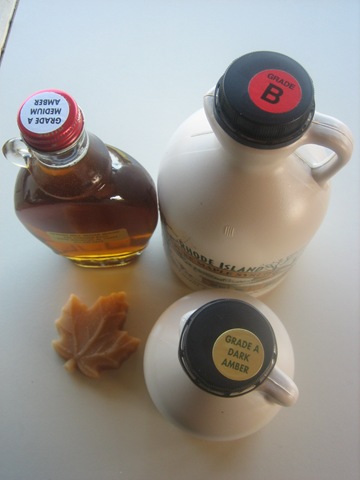
maple bottles2 copy March generally arrives in the nick of time: last year’s gallon of syrup is about gone, or may in fact have failed to make it to the next year’s production, forcing purchase at the store of a foreign (gasp!) product. Foreign state, usually—New Hampshire, Vermont (the largest producer in the country), Massachusetts, New York—but sometimes foreign country—Canada. If you knew how many my syrup’s-better-than-your-syrup joustings I’ve had with friends from other syrup-producing areas, you’d know just how fiercely loyal maple syrup fanciers are. In the realm of food, only corn and tomatoes spark similarly hot inter-state rivalry.
In the course of these arguments, I’ve been party to a number of side-by-side maple syrup comparisons. And I can say with confidence, if not particular helpfulness: they are all different. Weather, geography, local style preferences, and the economic incentives of and care taken by the farmer in the boiling process are all variables in a syrup’s sweetness, lightness, clarity, and overall quality. The syrup from the same farm will also vary from year to year.
Sugaring season lasts about six weeks, beginning usually in late February or early March, when the warmth of the sun on the trees causes the sap to run during the day, halting again at night as temperatures drop . The sap’s natural sweetness, ranging from about 1-4% (with a minimum of about 2% needed for syrup), is sucrose; the unique flavor comes from trace enzymes in the sap. Maple syrup is a completely pure, natural product; it is just boiled sap, with nothing added, until most of its water content has evaporated and its sugar concentrates to a density of nearly 70%. It is then strained, graded, and packed into glass, tin, or—increasingly—plastic (if you buy a large quantity or use your syrup slowly, I recommend freezing it and, if possible, transferring it into glass). These methods have barely changed since Native Americans first introduced this wonderful sweetener to the settlers. If you have your own sugar bush (group of sugar maple trees), you can even make your own. maple grades2
Maple syrup is a unique product requiring a good ten gallons of sap to make a single generous quart of syrup—the yield of about one tree for the entire season--and therefore commands a premium price according to grade. The grades have changed in recent years, and I still find it a bit confusing, to say nothing of silly. Ours used to be similar to Canada’s: AA (extra light or fancy), A (light) and B (medium), and so on. In the U.S., we now have three A grades: Grade A Light Amber (called Fancy in Vermont and some other areas), Grade A Medium Amber, Grade A Dark Amber, plus Grade B; the four go from light and delicate to progressively more maple-y, dark, and robust. But even here there is a mix and match; at Spring Hill Farm in Exeter, RI, where I bought my syrup this year, they also were selling “CD,” in between the dark Grades C and D, both part of the Canadian grading system. What to buy? Around here, most people use Grade B for cooking and medium or dark amber for the table. But the real criterion is to buy what your local farm has to sell; most will have B and at least dark and perhaps medium amber; this year, presumably because of weather conditions and perhaps partly because of costs, very little fancy or light grade is available. In addition to the syrup, of course, maple sap is boiled to different temperatures to make creamy maple candies, maple sugar, and maple butter or cream. Buy those too.
Sugar houses are generally open to the public to watch syrup being made; at some, you can still enjoy the traditional treats of sugar on snow (a sort of candy made by pouring hot syrup onto snow) and maple-glazed doughnuts with sour pickles. Pancake breakfasts are sometimes part of sugaring festivals or tours. A few farms still offer tours where you can ride out into the woods with the farmer on a sleigh or cart to collect the sap; I remember doing this about 20 years ago, and what a delight it was to return to the tiny, steamy sugar house with its wood-fired evaporator after driving slowly through the dark woods in the raw cold of a March afternoon. While many farms today collect sap via reverse osmosis and a pipeline, not being a Luddite (at least, not entirely) I recommend a visit to any farm that uses any method of collection; the boiling process remains virtually unchanged, and its miraculous product is well worth the trip—not the least reason of which is to support the producers.maple syrup2 copy
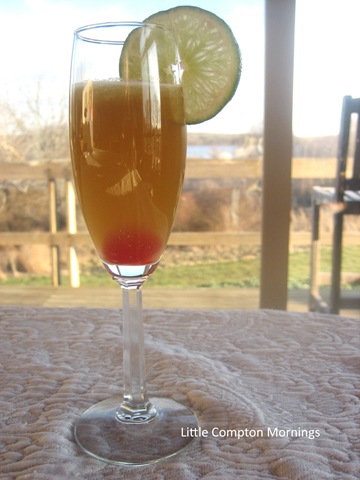
Use your fresh-made maple syrup in anything where you would use regular sugar, and particularly where you would use brown sugar or molasses: in baked beans, gingerbread and other spicy breads and cookies, as a sweetener for hot cereals or bread or rice pudding, in a glaze for doughnuts or coffeecakes. Of course, maple syrup is probably at its most sublime simply poured over your best sour milk pancakes or jonnycakes, where its light, fluid sweetness serves to set off their tangy edge. Indeed, wherever you have acidity, such as a salad dressing, maple goes well. That’s what first led me to use it when mixing up a batch of homemade whiskey sours. The syrup substitutes for simple syrup, minimizing effort at cocktail time . Which is, after all, one of the main points of cocktail time.
Maple Whiskey Sour
This favorite of my father’s is well worth reviving. You can experiment with substituting any number of sweet syrups for simple syrup made of sugar and water. For example, I also use my rose-hip syrup to make whiskey sours with wonderful results. Makes 2.
3 oz. blended whiskey (my father used Seagram’s V.O., and so do I)
3 oz. freshly squeezed lime juice, or half lemon, half lime
2 ½ oz. maple syrup, preferably dark amber
ice
lime slices (orange is traditional) and stem-on maraschino cherries for garnish
In a cocktail shaker, place 4 large ice cubes, the whiskey, juice, and syrup; shake vigorously, for about a minute. Strain into a sour glass or into a rocks glass over ice. Garnish. A proper whiskey sour should have a small frothy head to it.

                                                        maple sour2 copy

Sunday, January 6, 2008

Buckwheat: Warm for the Winter

Buckwheat flour 1 copy January in Rhode Island is for settling in and staying warm. To everything there is a season, and in this one, I lose interest in the luxury ingredients, complex menus, and rich preparations that mark the holidays. Like clockwork, I put them away for another year along with the holiday decorations, and begin to crave the cozy satisfaction of simple, homey, rib-sticking New England food.
For me, there is no mealtime so satisfying as breakfast, and none that lends itself so well to the old-fashioned without ever feeling like you want something lighter, trendier, more innovative. It is hard to improve on the idea of a pancake or jonnycake, or to even discuss doing so without sounding a bit silly. By all means, experiment with refining and rarifying dinner, but leave breakfast well enough alone.
An old favorite here in the Northeast is raised buckwheat pancakes. It just tastes like New England, in the same way that jonnycakes—a subject of a series of future posts--taste like Rhode Island. Many old-fashioned New England recipes call for buckwheat because it was widely grown here during the 18th and 19th centuries. In the mid-20th century, however, it largely disappeared from local cultivation. In 1964, the last year for which there are statistics, only 57,000 acres were harvested nationwide, compared with over 1 million just 50 years earlier. One possible reason for this is that buckwheat does not lend itself to “improvement” through plant selection and other breeding techniques; grown primarily without pesticides or herbicides, its principal enemies are deer and other animals, much harder to control. (The upside of this is that when you eat a buckwheat pancake, it may be little changed from the one pioneer women served their families.) Another factor in declined production was likely changing tastes, as bleached white flour took over in mid 20th-century America. In the last 30 years, however, due to increasing demand for health reasons and for uses such as pillow fills, there has been some renewed interest in developing viable buckwheat strains for commercial farming.
Buckwheat is not wheat, not even a grain. It is an herbaceous summer annual, related to rhubarb and sorrel; this means that buckwheat has no gluten, a plus for those with wheat allergies—or those (not me) who have sworn off bread and pasta for the New Year. Some buckwheat is utilized in the form of groats (the crushed, de-hulled kernels); this is the well-known kasha in the tasty Jewish dish, kasha varnitchkes (bow-tie noodles). Buckwheat flour is milled from the hulled triangular seed, and used for noodles (soba), porridge (from a coarser grit), a thickener for gravies and soups, and, of course, pancakes and blini. Buckwheat also is the source of wonderful dark honey (some beekeepers plant it specifically for this reason), which now commands a high price because of the crop’s scarcity.
Nutritionally, buckwheat is the best source of high-quality protein of all plants (better than soybeans), containing all eight essential amino acids. It is also a good source of complex carbohydrates, insoluble fiber, potassium, iron, and B vitamins. Buckwheat has beneficial effects to circulation and may help lower cholesterol and diabetes risk. To benefit from buckwheat’s wholesome profile, be sure your buckwheat is very fresh; buy small quantities and use it as quickly as possible, freezing any extra, because it is high in fat and can go rancid quickly. Also make sure you are buying 100% buckwheat flour, as it is often packed as a mix for pancakes that includes wheat flour.
Rhody-style Buckwheat Pancakes
You may be surprised, from the looks of the batter, how light these are. They have a slightly sweet, slightly nutty taste that is quite unusual. I like the taste of orange with them, and sometimes serve them with my orange-scented fig jam as well as with the tangerine-maple syrup here. Start these the night before; they are traditionally made in a pitcher for pouring out next day. Serves 4.
½ cup Rhode Island jonnycake cornmeal (see sources in left column)Buckwheat batter mixed copy
¾ cup boiling water
1 ½ cups buckwheat flour
¼ tea salt
1 cup whole milk, scalded
2 ¼ tea active dry yeast (1 envelope)
¼ cup warm water
1 T molasses
2 T warm water
scant ½ tea baking soda
extra milk if needed
2/3 cup 100% maple syrupBuckwheat batter raised copy
1 tangerine, peeled and sectioned
butter
In a pitcher or medium bowl with a pouring spout, pour the boiling water over the cornmeal and stir to a mush. Add the buckwheat flour, salt, and scalded milk, and beat well with a wooden spoon to incorporate and remove any lumps. Set aside until lukewarm.
Dissolve the yeast in the warm water and add to the flour-cornmeal mixture, stirring well. It will look a bit like wet sand or, truth be told, wet concrete, belying its ultimate texture. Cover, and let sit on the counter in a draft-free place overnight. Next morning, dissolve the baking soda into the water and add with the molasses to the bubbly batter, stirring well to combine; you can add a few tablespoons of milk to thin it if you think it is too thick. (If it looks as if the batter fell after rising, not to worry.)
Heat a griddle to medium heat and grease with butter or shortening. Pour the batter into 4-5”rounds. Do not turn until the tops look relatively dry and you can easily slide the spatula under the full breadth of the pancake, or they will break. Turn only once and finish cooking the other side; they will be nicely brown.
While the pancakes are cooking, put the maple syrup into a small saucepan. Squeeze a few sections of tangerine into the syrup, and drop the rest into the pan. Place over low heat for a few minutes. Butter the pancakes and pour the warm tangerine-maple syrup over them to serve.
Buckwheat pancakes 2 copy

Sunday, May 6, 2007

The 'Tween Months


Like their adolescent counterparts, the ‘tween months of March through May are an awkward way-station on to bigger and better things. Down on the farm, they are a lot of work, with the pay-off out ahead on a still-soggy horizon. Here in the kitchen, they are their own odd combination of waiting and make-ready, punctuated by the occasional glimpse of things-yet-to-come. We wait, at this point in near desperation, for that first decent greenhouse tomato and tiny head of soft Boston lettuce. We make-ready, if we have been clever or greedy or both, by drawing down inventory from our freezers, and using up odds and ends form our pantry, making room for the new. We drive to the source for a quart of this year’s maple syrup—in Rhode Island, I buy Rhode Island made—or the local asparagus or green onions, all sure signs that spring is here.

The asparagus is, of course, iconic, but it is the make-ready, and make-do, part of this time of the year that have a kind of perverse charm. What’s in the freezer that you have been hoarding for fear of being without in the dark of winter? What can you do with what’s on hand? How combine the old with the new?

For me, the answer to the first question is always (as it is as I rummage around now) berries (red and yellow raspberries, blueberries, and cranberries), corn stock, corn cut off the cob, whole tomatoes, sour cherries in light syrup, and strawberry preserves. These items I never completely finish off until May, when I know more is on the way. Being without a taste of summer—and it is amazing how perfectly preserved that taste of summer can be—would be like running out of water. So I hoard. This year I also find about two cups of shelled lima beans.

How to freeze for a taste of summer is a subject for when the time comes; right now, it’s what to do with the remains of the last year’s day, today. The goal is to marry last summer to this spring. Two things I generally make are a risotto with the corn stock and the new asparagus or snap peas, seasoned with a little lemon zest and mint, and sour-milk pancakes with the virgin syrup. Since you probably don’t have corn stock, I’ll save the risotto recipe for later. But you can make the pancakes with fresh or store-bought frozen berries if you don’t have your own in the freezer.

I like my pancakes thin and tender, never cakey, and my berry flavors distinct (raspberries are intense in a pancake, and can overwhelm others); I don’t mix berries, although two different kinds on a plate are fine, and satisfying. The ones in the photo are raspberry and cranberry. Here’s how I make them:

Sour-Milk Berry Pancakes

So the first lesson, obviously, is: don’t throw out that sour milk! In fact, be intentional in your refrigerator neglect—let some go sour, to have it on hand for all kinds of baking.

This batter should be made in the evening and stored overnight; in my opinion, it improves, developing its sour tang and crepe-y texture, over the next several days, so you can make a batch and cook as many as you, and you alone, want to eat. Stir before using each time, adding a bit more milk to thin as needed. And don’t add your berries until cooking, as described below. Serves 4-6.

3 c. unbleached flour, such as King Arthur
2 c. whole fresh milk
4 tea baking powder
¼ c melted unsalted butter
1 tea salt
1 c. or more sour milk
2 large brown RI eggs
Any combination of blueberries, raspberries, or cranberries, fresh or frozen

Sift together flour, b.p., and salt. Beat the eggs; beat in the melted butter and fresh milk, and add to the dry ingredients, stirring just until combined. It will be thick. Add sour milk, mixing, until it is the consistency of heavy cream. Refrigerate overnight or two.

If you don’t plan to use all the batter at once, ladle some into a 2-cup glass measure, and stir. Add as many blueberries or raspberries as you like (less is more, 5 or so/pancake). Heat a griddle medium-hot; if it is well-seasoned, like my prized old stovetop rectangular griddle, no need for added fat, otherwise lightly grease. Quickly pour out batter into 5” rounds, perfect pancake size, which is about 1/3 cup according to your glass measure, depending on your batter thickness. When bubbles have formed on top, turn and cook ‘til lightly golden; these pancakes will be paler than most. If your first batch seems a little thick, thin with additional sour milk. If you are sharing, you can keep your pancakes warm in a 200 F oven while you make more.

Serve with butter and pure Rhode Island maple syrup that you have picked up at the farm (see source links to left). Maple syrups vary in subtle and delightful ways from state to state and, of course, season to season and farm to farm. Why not try them all? Hold a taste test or, as we did when we were kids, a pancake-eating contest. Any excuse will do.