Monday, July 2, 2012
Rhode Island Cornmeal Competition: And the winner is. . .
Saturday, May 5, 2012
Three holidays: Cinco de Mayo, Derby Day, LCM 5th Anniversary
What a difference a year makes. Today is Derby Day, the running of the Kentucky Derby horse race, and if I were in Nashville as I was last year at this time—which, thankfully, I am not—I would feel compelled to wear a big hat and make something Southern, and likely a mint julep. But I am in Tucson now, hard by the Mexican border. And today is also Cinco de Mayo, a holiday celebrated throughout America and becoming as popular as Halloween, not least because it is a great excuse, as if one were needed, to eat Mexican food. So Mexican it happily must be.
It is possible that what I have to let go is the really time
consuming part of the blog—the insistence on recipe writing. It would be so much easier and faster to just
write about and photo what I cook and eat, or carp about the declining this or
that, something I am congenitally good at. Or use other people’s recipes rather
than develop and codify my own or spend a lot of time testing out the sketchy
instructions from heirloom New England cookbooks. 1 oz grated piloncillo (or light brown sugar, dried)

Saturday, July 24, 2010
Cornmeal: Where the North and South Lay Down Their Arms and Embrace
OK, as a writer, I know that’s a mixed metaphor, or at least a trick with homonyms. But as someone who divides her time (no pun intended) between the True North and the Deep South, who is a RI Yankee in Jefferson Davis’s court, and is all too aware of the political, religious, and cultural differences, it is nice to have something on which we can agree. Cornmeal is that something.
Rachel, one of my most loyal readers—and eloquent commenters—recently bestowed upon me an honorary G.R.I.T.S. designation, which I humbly accept. For you Yankee readers who, like me, had no idea what this meant when I first heard the acronym, it means Girl Raised in the South. This, apparently, is akin to a secret society, is a high honor, and may even entail ancient rituals into which, if so, I hope to be initiated. There might even be hazing: I suspect that this might include baptismal dunking in buttermilk or partially set Jell-o®, force-feeding of fried chicken, memorization and recitation of the methodology, highly refined over generations, for making the men think they are in god-like charge while the women actually control everything and do whatever they want (a practice for which I may be constitutionally unsuited, but that fascinates nevertheless), and marathon shopping in endless strip malls containing surprisingly exclusive boutiques. Sounds like fun.
In any case, neither true Yankees nor Southerners would be caught dead using anything but stone-ground cornmeal—here in Rhode Island we even have our own revered strain of corn—and we both use it for everything from breading and breads and sweet cakes and some variant of jonnycake to our own forms of mush, which Southerners call grits. And we both mix the latter with cheese, a meltingly good, somewhat decadent, combination. Here, cornmeal is cooked to a polenta-like stage, fried up, and topped with whatever you may please.
Little Cornmeal-Cheese Cakes
You can serve these as cocktail appetizers (topped with, for example, a little chopped tomato sautéed with pancetta; chopped marinated roasted red peppers; roasted figs and onions; or a little corn and tomato cooked in cream), or for breakfast with bacon. Leftovers reheat acceptably in the microwave. Serves3- 4.
1 cup boiling water
½ cup stone-ground yellow or white cornmeal
½ tea salt
½ cup whole milk
1 cup store cheese (good-quality aged cheddar), grated or cut in chunks
Flour for dusting
Butter and oil for frying
Mix the cornmeal with the milk. Bring the water to the boil with the salt; add the cornmeal mixture, stirring, and let it boil and bubble for about 5 minutes, stirring as needed so it does not scorch. It will have a pasty consistency. Cover and steam on low or over boiling water for a few hours, or steam it in a microwave. When quite stiff and pulling away from the pan, remove and add the cheese, stirring until melted. Grease 6 or 8 compartments of a muffin pan and divide the mixture among them, pressing it down evenly with the back of a spoon. Chill for a few hours or overnight. Turn out and let sit a bit to take the chill off. Flour lightly, and sauté in a mixture of butter and oil until golden brown, turning once. You may keep them in a warm oven. Serve while hot.
Sunday, November 9, 2008
Elegy—and Ode—to the Lost Muffin
Not one
bakery
in this or any other
city
makes a muffin
like your grandmother:
plain
crumbly
ready for butter
and small
Not one
person
in this or any other
fine town
has yet tasted
a gem that's not cake:
fatted
floured
sugared for toothache
and huge
But two
reasons
in this or any other
season
let us forsee
cake muffins undone:
obesity
and scarcity.
Forsake the bakery
for home
LCM Jonnycake Muffins
Plain, crumbly, ready for butter. . .and small. One of my favorite gems, with a crisp exterior and softer, crumbly interior. Makes 8.
½ cup RI white cap flint cornmeal
1 cup a-p flour
3 tea baking powder
¼ tea salt
2 large eggs
¼ cup pure maple syrup, grade B or lower
1/3 cup milk
6 T butter, melted
Preheat the oven to 400 F. Grease 8 cups of a standard muffin tin, starting at the center. Place paper muffin papers in the remaining cups.
Put the cornmeal in a bowl, and sift in the flour, salt, and baking powder. Into a 2- or 3-cup measuring cup, measure the maple syrup and milk; add the eggs and the melted butter, and beat well. Pour over the dry ingredients and stir until just combined. Divide the batter evenly into the 8 greased cups of the muffin tin, and bake for about 22 minutes, until golden brown. Allow to cool about 5 minutes in the pan before turning out and serving with butter or butter with a little maple syrup beaten in. In the unlikely event there are any left over, these freeze and reheat beautifully with 25 seconds in the microwave.
Sunday, September 21, 2008
Indian Meal
I was rearranging my cookbooks recently and as usual, got sidetracked. It is always my collection of old pamphlets and antique cookery books that draws me in the most. Inside one I found some notes I had taken at the Brown University archives in Providence a few years ago. I was supposed to be working on something else at the time, but of course I got sidetracked again—to their own collection of old cookbooks. That’s one of the lovely problems with libraries.
The notes I found were all on various recipes using corn and Indian meal, which is the old term for stoneground white-cap flint cornmeal, or jonnycake meal, discussed in this blog in the context of Portuguese bread and thick and thin jonnycakes. The recipes came from books with titles like The Indian Meal Book: Comprising the Best Receipts for the Preparation of That Article (1847). I’ve yet to try many of them, but looking them over reminded me of how long it had been since I’d made Indian Pudding.
Indian pudding, like jonnycakes, is a bit of an acquired taste. It’s old-fashioned enough that it has disappeared from the majority of restaurant menus, but, for the same reason, remains firmly on the menu of many a Rhode Island and Massachusetts country or traditional restaurant. It is made with cornmeal, so has an unusual, slightly grainy texture. Some versions are strongly flavored with molasses, to which some people are partial, some are not; and some are very (I think overly) sweet. All versions qualify as nursery food—soft and comforting.
Here is a version of Indian pudding that is a little less sweet and more delicate than some, as it is made with a modest amount of maple syrup and only enough molasses to give it a good color and characteristic flavor. It uses the trick of pouring cold milk over it partway through cooking to create a softer texture—and a more authentic one—than those puddings that more closely resemble a baked custard. Both types are good. Vanilla ice cream is more often than not the accompaniment, with whipped cream a fine alternative.
Indian Pudding
If you like raisins, you can put some in with the milk when you scald it, or you can stew some in a little brandy or rum and pour them over the ice cream when
you serve. Serves 6.
3 cups whole milk
2 T butter, lard, or chopped suet
½ cup Grade B pure maple syrup
2 T molasses
1 ¼ tea ground ginger
generous dash cinnamon
½ tea salt
½ cup RI stoneground white flint cornmeal
3 large eggs, beaten
1 cup cold whole milk
Preheat the oven to 300 F. Butter a baking dish, about 9” square or about 2 quarts.![]()
Scald the milk together with butter, syrup, molasses, ginger, cinnamon, and salt. Add the cornmeal and stir constantly until it is about as thick as a thin cake batter, about 10 minutes. Pour a little of the hot cornmeal-milk mixture into the eggs to temper them, then stir the eggs into the cornmeal-milk mixture in the pan. When well combined, pour into the prepared pan and bake for about a hour. Open the oven door, stir the pudding (which will be quite firm), smoothing the top with the back of the spoon, and then pour over it the cup of cold milk. Continue baking for another hour. You can serve the pudding warm (cooled for 20 minutes or more) or cold.
Sunday, April 6, 2008
The Great Jonnycake Debate, Part II: Thin
These differences in preparation do result in a different taste. The bittersweet tang is still there, but less density means less intensity. Eating thin jonnycakes is like eating breakfast pancakes that taste like nothing else you’ve ever had: they look similar, until you take a bite. Jonnycakes are, in fact, the pancake substitute in another unique Rhode Island tradition, the May Breakfast (at least, in those where tradition is inviolable—some have replaced them with the less-temperamental standard pancake).
In a state that loves controversy, there is disagreement over the origin of the May Breakfast. One theory is that it was first started to celebrate Rhode Island’s declaration of independence from the British crown on May 4, 1776—two months before the official declaration of the colonies. Another is that it began in the mid 19th century with a “May Day” fund-raiser for a new building for the Quaker meeting house in Cranston. I lean toward the first explanation, although it is true that nowadays most May Breakfasts are sponsored by churches or civic organizations to raise money, serving up good food for a good cause.
Like the public clambakes that are held all over Rhode Island throughout the summer, May Breakfasts are held all over the state, usually between the first and seventh of the month, although a few have resorted to late April in a crowded field. Check your local papers, as most are not widely advertised. In addition to jonnycakes, there is usually ham and bacon (sometimes chorizo), eggs, clam cakes (I’ll get to those eventually), baked beans, pie, juice, and coffee; at some, there are the more modern additions of home fries, muffins and other baked goods, or the aforementioned alternate of pancakes. Food is served family style and a filling time is had by all. If you start practicing now, you will have perfected the de rigueur lacey edge in time to hold your own May Breakfast. That is, if you decide to align with my side of the bay.
Having trouble choosing between thick and thin? Like Switzerland, you can remain neutral, welcoming and eating all, no questions asked. There is even what some call a “middle-of-the-bay” jonnycake, the ultimate political compromise, which uses both boiling water and cold milk; indeed, you may discover that many contemporary recipes for thin-style jonnycakes are written this way. You start with making a boiling-water mush, and add cold milk to thin. It is not traditional, but it is easier to cook, as is the faux or near-jonnycake, which contains flour and sometimes egg, that is sometimes passed off in restaurants as the real thing. To say nothing of the fancy ones, flavored with juice, liqueur, spice, or other new-fangled additions.
Me, I like jonnycakes in any guise. But I hew to the old ways when I make them at home—through thick or thin.
East of Bay Jonnycakes
The local cornmeal on this side of the water is Gray’s, from a small grist mill in the village of Adamsville on the Westport, Massachusetts/Little Compton, Rhode Island line. For a brief, shining moment (actually, a few years) during the 1990s, Gray’s milled an amazing coarse-grain yellow meal that made the most sensational polenta I have ever had. When they stopped making it, I bought up as many bags as possible and hoarded the final one in the freezer for—I’m somewhat embarrassed to say—years, even twice moving house with it. Alas, I was compelled to use it up at a certain point when it was starting to yield a slightly off taste, and it is now gone forever. But the memory lingers on. Serves 4 (about 12 5” cakes).
1 cup Rhode Island stone-ground white flint cornmeal
½ tea salt
1 ½-2 cups whole milk
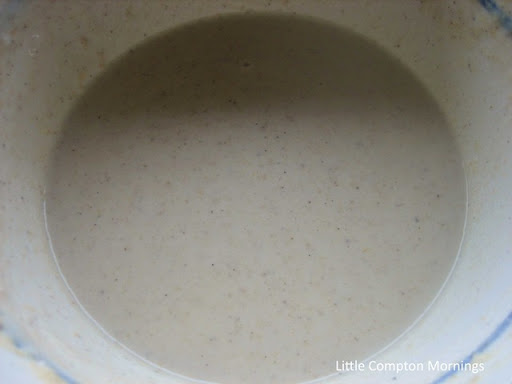
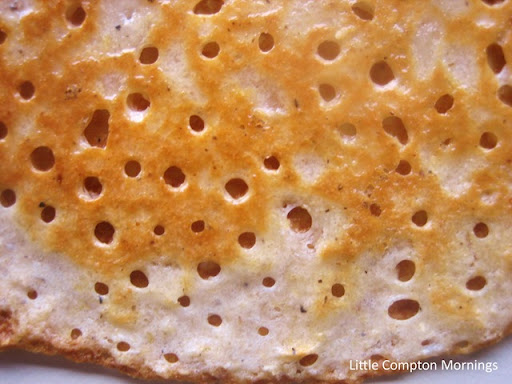
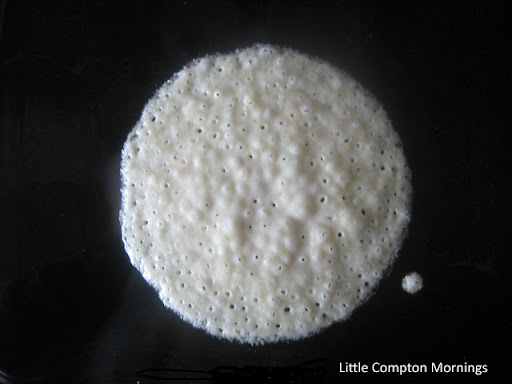
Use a spouted bowl or pitcher (preferably with a handle) to mix the batter. Warm the cornmeal in the oven and stir in the salt. Very gradually, stirring all the while, add the milk until you have a thin, soupy batter; start with between 1 ½ and 1 ¾ cups. Generously grease a medium-hot griddle with bacon fat or lard, and pour batter onto the griddle to make cakes about 5-6” diameter. If the temperature is right and the batter of proper consistency, the batter will immediately spread and bubble and holes will appear. Do not panic.
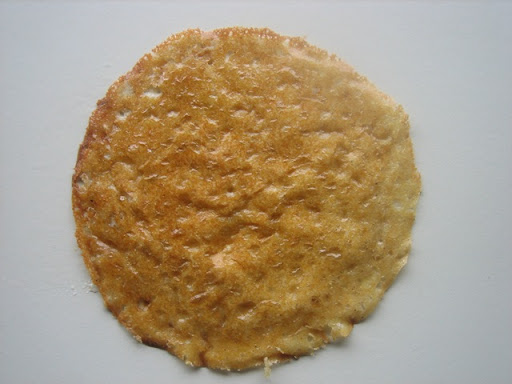
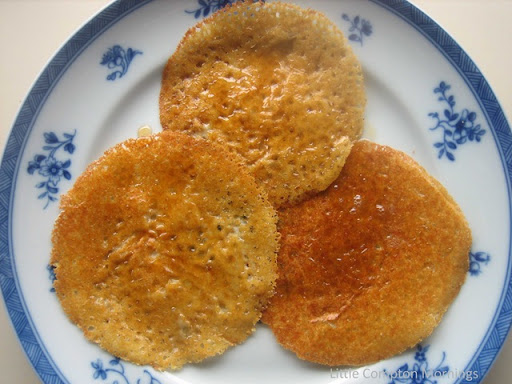
Cook undisturbed until the thin edges are brown, the surface has begun to dry, and you can easily slide a sharp, clean metal spatula beneath it. This will take 3-5 minutes, depending on your heat. Turn, revealing an evenly golden cake of crepe-like thinness with a frilly edge. Cook another 2 minutes or so; the bottoms will have the appearance of a perforated golden network.
The trick to cooking these is the thinness of the batter and the proper temperature. Too thick, and it will not spread to frill at the edges; add more milk, and do so throughout the cooking if the batter thickens will sitting. Too hot, and the cakes will burn; too low, and they won’t cook through. Test one before making a full batch, and adjust the heat as needed (usually, lower). Keep your spatula edge wiped clean.
You can hold jonnycakes warm in the oven while you cook the rest. Serve them on their own with butter and maple syrup, or alongside eggs and/or bacon, ham, or sausage.
Notice: Voting for Rhode Island Monthly’s Best of Rhode Island is open, and there is a category for best local website. If you appreciate Little Compton Mornings and would like to show your support, you may vote here now: http://www.rimonthly.com/Rhode-Island-Monthly/Best-of-Rhode-Island/Best-of-Rhode-Island-Ballot/ . I thank you!
Sunday, March 30, 2008
The Great Jonnycake Debate, Part I: Thick
The crux of the matter is: thick, or thin? An ocean divides those favoring the one over the other. Or rather, a bay: those who favor thick jonnycakes dwell west of Narragansett Bay (and often put an “h” in the spelling), and those who favor thin dwell on my side of the water, east of Narragansett Bay. In fact, the thick are often called “West of Bay” jonnycakes (sometimes called “South County”), and the thin “East of Bay” (sometimes called “Newport”). The Green Line. The Berlin Wall. The Naragansett Bay. There is no construct more political, or arbitrary, than geography.
I am a good neutral party to referee this debate. After all, I’m originally from New Jersey, and come to the subject with no congenital bias. On coming to Rhode Island, I first lived in West Bay—and my first jonnycakes were, of course, thick—but I now live in the thin country of East Bay. I approach the topic with a diplomat’s knowledge and respect for cultural differences of opinion. I have, as you surely know by now, no opinion of my own. I'm perfectly objective.
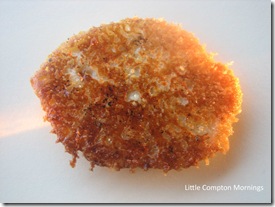
Definitions are the foundation of legitimate debate, so we’ll start there. A jonnycake is a pan-fried unleavened cake made from 100% stone-ground Rhode Island white flint cornmeal mixed with water (and/or a bit of milk, depending on allegiance) and a little salt. The real thing contains no sugar, no flour, no flavoring, no fat, no egg. It is the most basic, indeed primitive, of breads, its nourishing preparation yet another gift of the Patuxet Indians to the struggling Pilgrims. The unique bittersweet taste of a jonnycake is the taste of history.
We start with the thick side of the controversy because thick jonnycakes are most likely the closest, perhaps nearly identical, to the ones first tasted by the settlers. They are also somewhat easier for the beginner to make. Jonnycakes may be simplicity itself, but cooking them properly takes a lot of trial-and-error practice to obtain a cake that is fully cooked without being burned, and that will remove from the pan without benefit of a chisel and sledge hammer. Not to scare you from trying your hand, just to let you know that, if your initial batch is ruined, you are not the first. Lower the heat, use a heavier pan, and try again.
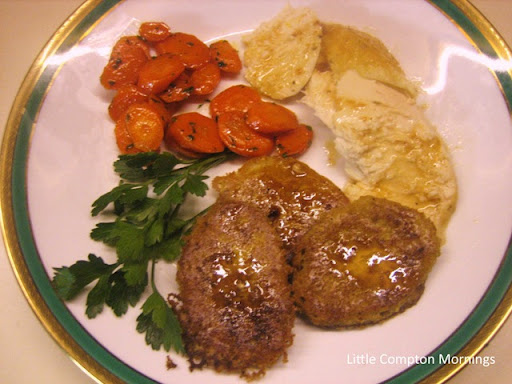
A classic but nearly forgotten way to serve thick West of Narragansett Bay jonnycakes is with roast chicken and gravy. Nowadays most people eat them exclusively as breakfast food, with lots of butter and maple syrup, but they make an admirable substitute for potatoes. In fact, my first taste of jonnycakes was as a side to a chicken dinner. A college boyfriend, the late Manny Read, made them for me, as I of course had never heard of them before arriving at URI. I prepared the chicken and gravy to accompany them (told that this was the proper way to eat them), dubious all the while as to the propriety of putting a sort of pancake alongside a chicken, let alone the palatability of any pancake that was to cook for half an hour. To this day, that meal is a vivid taste and personal memory. I suppose you could say it made me a Rhode Islander.
Back then, chicken and jonnycakes could be found on restaurant dinner menus, particularly in Johnston and other towns in the northwestern part of the state. One of my very old Rhode Island cookbooks even has a recipe for something called “Johnston Spanks,” a kind of deep-fried thick jonnycake, to be served with poultry and meat. I am not so sure you could find this dish in a restaurant anymore. But you can make it at home.
Thick West of Narragansett Jonnycakes
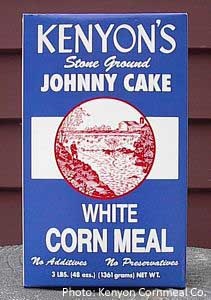
West of Bay, cooks generally use Kenyon’s or Carpenter’s cornmeal for their jonnycakes; note however that Kenyon’s has not used white flint corn for five or more years due to low availability. You can visit Kenyon’s 17th century grist mill, located near University of Rhode Island in Usquepagh, or Carpenter's water-powered, 18th century grist mill in Perryville near Moonstone Beach. There is controversy about cooking time; I have given both timings, which in many ways depends on just how thick you like to make your jonnycakes and how you control your heat. Makes 8-10 thick cakes.
1 cup stone-ground jonnycake cornmeal
1 cup boiling water and more as needed
½ tea salt
Put the cornmeal into a heatproof bowl and warm it in an oven or microwave. Mix the boiling water into the cornmeal and salt to form a mush; let it stand, covered, for a few minutes. Add 1-4 tablespoons more water (some use milk, I do not) to thin, if necessary, to achieve the consistency of light, smooth mashed potatoes that will fall readily from a spoon. Some modern cooks also add a teaspoon of sugar or molasses, but it alters the divine bitter edge of a true jonnycake that is better offset with syrup or a sweet accompaniment such as chutney or glazed vegetable.
Cooking Option 1
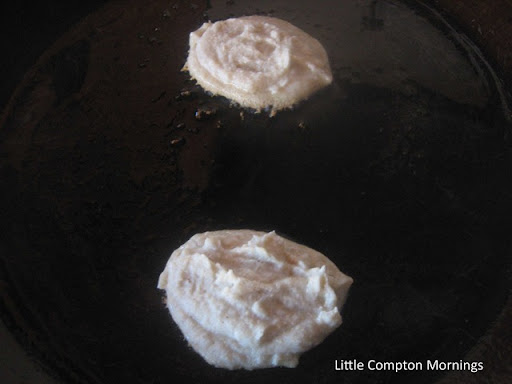
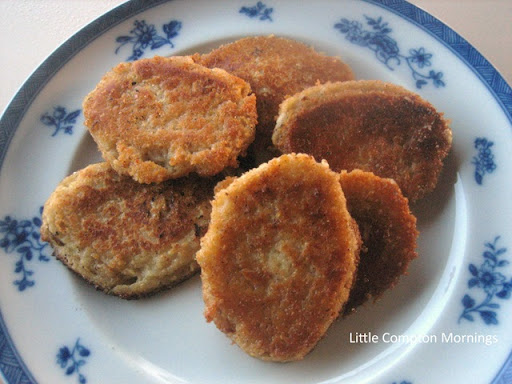
Heat a griddle medium hot and grease generously, preferably with reserved bacon fat or lard. Stir the mush once more, and drop it by tablespoonfuls to make oval cakes about 3 inches long and ½” thick or more. There should be enough fat that the cakes sizzle gently around the edges. Cook, without disturbing or pressing down, 6 minutes; turn, and cook another 6 minutes. They should be brown and somewhat crusty; depending on your heat, they may be ready to turn (easily, without prodding at all) in a minute or so sooner, but jonnycakes need to be cooked through so that the center is not mushy. It is traditional to make and then discard the first (often burned) trial jonnycake, but once you get the hang of it you won’t have to.
Cooking Option 2
The same except heat your griddle to medium low and cook for 15 minutes each side. This is a more traditional way of cooking them, and is suitable if you like your jonnycakes plump.
As you finish your jonnycakes, put them in a hot oven to puff up a bit and keep warm. Serve with chicken and gravy (or as I do nowadays, pan juices thickened with a little butter), as a base for a sauced dish of meat or seafood, or for breakfast with butter and maple syrup. Maple-glazed carrots are a nice accompaniment to the chicken.