This week I moved my son and one-and-only child to New York, where he starts his first job tomorrow. He’s graduated. He’s grown up. He’s gone. It may take 21 years, but the child’s growing season is the fleetingist of all. One day you are carrying them fresh and new into your home; turn around the next, they have matured on the vine and you are carrying their things out and into their own.
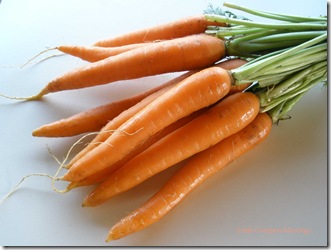
The morning I left New York, after a whirlwind two days of unpacking and settling in, my son and I met for coffee and walked down the street to Dag Hammarskjold Plaza, one of his neighborhood’s many small parks, to sit. It was Wednesday, Greenmarket Day, and I was surprised to see a full-blown, well stocked market, a veritable miniature Union Square. There was fresh fish; grass-fed beef, pork, and veal; baked goods; honey; handmade cheeses and eggs; and an excellent selection of fruits and vegetables, everything grown, raised, or produced in New York. Buying to bring back to Rhode Island would have been, for the most part, like bringing coals to Newcastle. But the truly beautiful carrots I could not resist.
Carrots are underrated, I think, even considering my well-known congenital preference for sweet vegetables. A fresh-pulled carrot rates right up there with fresh-picked corn or
freshly dug potatoes in the category of transcendent—and transient—unadorned eating experiences. In the desert-island game of foods you would choose if you had to eat the same thing forever, raw carrots with salt are invariably on my list (along with good bread and butter, and steak, and apple pie). I love them glazed with butter,
maple syrup, and salt and white pepper, for their taste and for the burst of color they add to the plate. At this time of year, beautiful carrots contribute to crisp (also underrated) coleslaw or other salads, and make a lovely summer appetizer blanched and served with
aioli. Either grated or pureed carrot is used in carrot cake (I make a carrot chiffon cake with a puree), but both have myriad other uses. Grated carrots can be used as a crunchy binder in meatballs, pureed carrots in sweet or savory custards, stirred into turnips or mashed potatoes, as a base for soups, or served on their own with lots of butter and herbs. And the nutritional value of carrots, while legendary, is worth a reminder, particularly their astoundingly high level of natural antioxidant vitamin A carotenes.
So consider the carrot. When you see them, tall or short, orange or yellow or red or purple—the
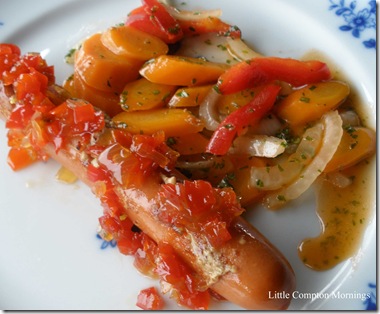
variety I saw in Switzerland was lovely—, and intact with their giant tops, buy them. They are a delicious treat, and the simple preparations to which they lend themselves are pretty and satisfying. I found myself, returning home after sending my son off to his life, making this salad from my own youth, one of my Pennsylvania German grandmother’s many sweet-sour concoctions blending sugar and vinegar. Along with a natural casing, snappy beef frankfurter, topped with some of the last jar of last summer’s
red pepper relish, it made a simple and yes, comforting, lunch.
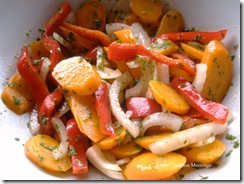
Sweet and Sour Marinated Carrots
In a departure from my by-now familiar room-temperature rule for salads and marinated vegetables, serve this one cold. The recipe makes a generous ½ cup dressing; you may have some left over, enough to dress sliced tomatoes the next day.
Serves 2.
½ lb carrots, or about 4 medium
2 slices, about 1/8” thick, from a large onion, cut in quarters
½ sweet red pepper, sliced thin
2 T finely chopped parsley
2 T homemade tomato sauce, pressed through a fine strainer (see Note)
¼ cup vegetable oil
¼ cup sugar
¼ tea salt
1/8 tea white pepper
¼ tea celery seed
¼ tea dry mustard
2 T cider vinegar
Peel and trim the carrots; cut them at a 45° angle into slices about 3/16” thick. Blanch in boiling salted water about 3-4 minutes, or until they can be pierced with a sharp knife but are still firm. Drain and rinse under cold water; set aside.
In a small bowl or glass measure, whisk together the tomato sauce, oil, sugar, and seasonings until thick and well combined. Whisk in the vinegar.
Place the well-drained carrots, the onion, the pepper, and parsley into a serving bowl and pour over enough dressing to just cover—a little more than half, most likely. Toss well, cover the bowl, and marinate in the refrigerator for about 8 hours or overnight. This is a nice side for anything smokey, from ham to grilled sausages, burgers, or dogs.
Note: I like to have fresh tomato sauce, made from imported plum tomatoes cooked in a few tablespoons of olive oil and seasoned with salt only, on hand, and always save even the smallest amount left over from making pasta or pizza. With just a few tablespoons, you can make a dip for fried food or sausages, or use it to add body and flavor to stews, soups, sauces, and dressings. You can substitute canned plain tomato sauce or even thick tomato juice here.
 OK, tomatoes have absolutely nothing to do with doughnuts—although
I could imagine a tomato-infused cake doughnut,
covered in cinnamon
OK, tomatoes have absolutely nothing to do with doughnuts—although
I could imagine a tomato-infused cake doughnut,
covered in cinnamon 


