As usual, we ended the year with a nod to tradition, a
casual, largely pick-up meal that is as good today as it was in the 1960s—a quasi-steakhouse
dinner of London Broil, wedge salad with a ranchy blue-cheese dressing (Maytag, of
course), some very exuberant, gigantic popovers (you want lots of bursting
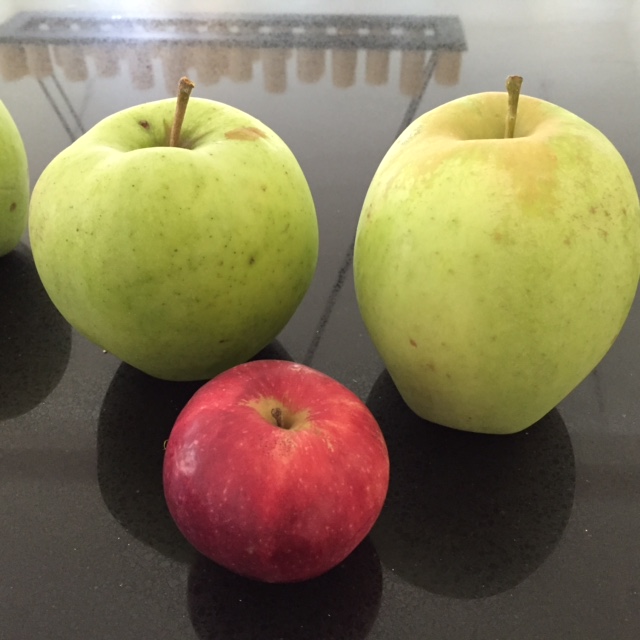
things for New Year’s), champagne, and some apple turnovers made of leftovers—leftover puff
paste, leftover almond pastry cream from a Pithiviers. And on New Year’s Day
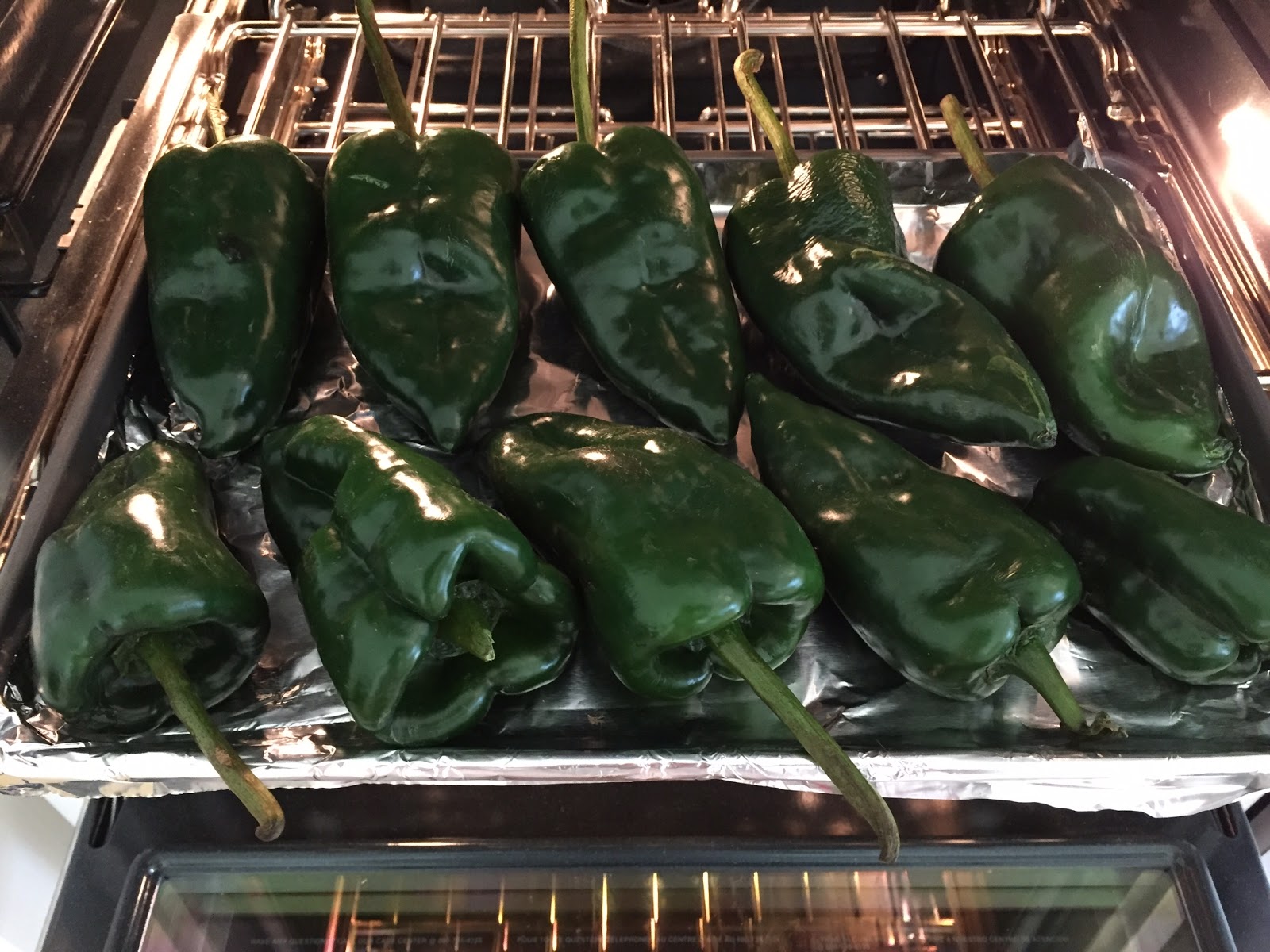
for breakfast, we enjoyed the fruits of end-of-year labor: homemade tamales filled with shredded pork in
a rich ancho-cascabel sauce. Next to apple pie, my favorite thing to have for
breakfast. And my son’s very favorite.Wednesday, January 2, 2013
Happy New Year—the Popping of Champagne and Popovers
As usual, we ended the year with a nod to tradition, a
casual, largely pick-up meal that is as good today as it was in the 1960s—a quasi-steakhouse
dinner of London Broil, wedge salad with a ranchy blue-cheese dressing (Maytag, of
course), some very exuberant, gigantic popovers (you want lots of bursting
things for New Year’s), champagne, and some apple turnovers made of leftovers—leftover puff
paste, leftover almond pastry cream from a Pithiviers. And on New Year’s Day
for breakfast, we enjoyed the fruits of end-of-year labor: homemade tamales filled with shredded pork in
a rich ancho-cascabel sauce. Next to apple pie, my favorite thing to have for
breakfast. And my son’s very favorite.
How could 2013 not be a good year?
Popovers
Use your ancient cast iron popover pan unless, like mine, it
went missing in one of your moves; an aluminum popover pan; or, better yet,
some 6-oz ceramic custard cups. Put your popovers in the oven while your meat
is resting. Serves 6.
1 cup flour, sifted
1 cup whole milk
3 T butter
3 eggs
big pinch salt
Preheat oven to 450F (use an oven thermometer), placing the
rack in the lower third of the oven. Generously butter the pan or custard cups,
placing cups on a sturdy sheet pan.
Whisk the eggs well, then whisk in the milk and melted,
mostly cooled butter. Whisk in the sifted flour and the pinch of salt. You can make this a few hours ahead; it will
be like a thick crepe batter.
Place the pan/cups in the hot oven for a minute or two, then give the batter another stir and pour it in: do not fill more
than a scant 2/3. Bake for 20-30 minutes until huge, dry, and very brown. Do not open the oven while baking!
Serve immediately with lots of soft plain or flavored (e.g.,
fruit puree, herbs) butter. They will not be quite the same, but you can store any
leftovers (ha) in a plastic bag, then reheat in the toaster oven until they
have crisped up.
Wednesday, December 26, 2012
Chestnuts Roasting: Merry Christmas!
Christmas Eve is when we have our big dinner; even for the seasonally
small family of me and my son out here in Tucson, it is big, probably too much
so. But as Bob Cratchit said, it’s only once a year.
Here’s the four-course menu—served with French wines (a
white burgundy and a good Haut-Medoc), with a Warre 1994 vintage port with our
dessert—and a recipe for the soup, a favorite of mine. Jordan really liked the
ice cream:
Chestnut Soup with
Herbed Puff Pastry Twists
Rack of Lamb
Persillade with Fig Sauce
Duchesse Potatoes
Glazed Onions
Haricots vertes with hazelnut butter and thyme
Coconut-ginger ice
cream with truffles and cookies
Happy Holidays, and happy eating, to all.
This is a delicious and somewhat luxurious soup, suited to
the season. You can make it ahead; add
the cream when you reheat if you do. Serves
6-8 (6 rim soup, or 1-cup, portions).
3
tablespoons unsalted butter
1/2
cup each finely chopped celery, carrot, and onion
A
few sprigs flat-leaf parsley
3-4
whole cloves
1 large dried bay leaf--make sure it is new
6
cups chicken stock, on the light side
3
cups cooked
whole chestnuts, peeled and crumbled;
you can do them fresh, or buy jarred or vacuum-
packed
1/4
cup tawny
port or Madeira
1/4
cup heavy cream
1/4
teaspoon black pepper and a little salt
Fennel
tops or chopped parsley for garnish
Make a bouquet
garni: Tie the parsley, cloves, and bay leaf up in a piece of cheesecloth.
Melt the butter
in a 3-quart heavy saucepan over low heat, add the chopped celery, carrot, and
onion, and cover the vegetables with a buttered round of wax paper, buttered
side down. Cover the pan and sweat the vegetables until soft, about 15 minutes.
Discard the wax
paper. Add the stock and bouquet garni to the pan. Bring to a boil, then reduce the heat and
simmer, covered, 20 minutes. Add chestnuts (you can crumble them in with your
hands at this point) and the port or Madeira. Simmer, covered, for about 3
minutes.
Sunday, September 2, 2012
Pie: Buttermilk, Blackberries, Birthday
Both times, happily enough, the final product was
interesting. I am almost tempted to leave the butter out of this pie again—the
filling separated, much like an old Pennsylvania German favorite of me, my
mother, and grandmother, lemon cake pie (I’ll make it for the blog sometime),
and it tasted really good. Hence the
photos of two pies, and two slices of pie. The one with the blackberries
is the butterless attempt; the one with raspberries
is the “correct” one.
Below is how I started off my post on buttermilk, blueberries, and birthday a month ago, when I was still
in LC. What a difference a month makes. Or a stick of melted butter.
********
I do love alliteration. And of course, pie. And berries of
all sorts. And dairy. So it all came together last week on my birthday. As a
child I always asked for pie on my birthday—apple, to be precise—and now that I
make my own birthday desserts, nothing much has changed except for the kind of
pie itself. I’m more likely these days, when my favorite local apples are not
yet in but we are still enjoying berry season, to make a blueberry or mixed
berry pie. This year, not really thinking about making a pie, I picked up a cup
of blackberries and on the morning of my birthday I thought, what would this
make a nice garnish for? A traditional custard pie, of course. Or a lemon curd tart. But I
had buttermilk
on hand (as always) and wanted to use it up before I leave LC (sadly, time to
think about that). So an old-fashioned buttermilk pie, a tangy riff on a chess
pie, seemed a good and practical match for the blackberries.
Buttermilk is, of course, not what it used to be; it’s not
really the milk from churning butter. It’s more of a constructed product. But
it is good in its own way, a kind of light, liquid sour cream. It is great stuff for dips and salad
dressings, for marinating chicken, for making tender cakes. I don’t drink it.
But then again, I don’t drink milk either, and never did. Ever.
But milk transformed is one of my favorite things, and this
is a favorite pie.
Buttermilk Pie
The baking time on this pie will depend greatly on your
oven. Watch it, and use your judgment.
It should not be jiggly, but only just firm. Test as you would a
custard, by inserting a knife half-way between the center and the edge. Serves 6.
Pastry for a 10” pie plate or 9” deep dish pie plate. You
can make an all-butter pastry or make one with 1 ½ c flour, a big pinch of
salt, 6 T butter, and 2 T lard or shortening, and cold water to bring it
together.
3 T flour
¼ salt
3 eggs, separated
2 c buttermilk
2 tea pure vanilla
8 oz (1 stick) butter, melted and slightly cooled
Preheat the oven to 425 F.
Line the pie dish with the pastry and chill in the freezer. Mix
the sugar, flour, and salt and set aside. In a large bowl, beat the egg yolks
and whisk in the dry ingredients. Add the buttermilk, vanilla, and melted butter,
whisking til smooth. Beat whites stiff but not dry and fold into the custard
mixture, blending well. Pile the filling into the chilled shell. Bake the pie at
425F for about 15 minutes, covering the top with a sheet of foil if it
gets too brown; reduce to 325F for another 25-30 minutes, until the pie is
golden and a knife inserted midway comes out clean.
Let the pie cool on a rack. I prefer this pie at warm room
temperature. Do refrigerate leftovers, but take it out of the refrigerator 20
minutes or so before eating them to take the chill off and get the texture back
to the way it should be. Serve plain or with fruit.
Sunday, August 19, 2012
August Corn III: Corn Fritters
Yes, I am back in Tucson. You may have suspected, since I
missed posting last week--the first sign, at the end of the summer, of
impending blog hibernation. I was traveling back to Tucson last weekend, and
there is nothing like a change in schedule to throw you off your blogging game.
School starts tomorrow, and you know what that means. The game of weekly posts
is up.
But back to corn and why I will be
on corn, as well as blog, hiatus until next summer. There is corn at the
farmers market here, but I can scarcely bear to look at the poor things, let alone buy and
eat them. (I know there is an agreement issue with that sentence, but I couldn't make it come out right in singular. Feel compelled to explain.) So I limit my corn eating to New England summer. Ditto with fish. Fortunately, the Hatch
chiles are in to distract me. Maybe this year I will figure out what all
the fuss is about.
I love corn fritters of all
shapes and varieties, and so decided to make some on one of my last evenings in
LC. These below are yet another type than others
on the blog, very much like a clam cake, for those of you from Rhode Island
who know from whence I speak. For those
who don’t: they are like little puffs of slightly eggy, fried, studded (with
corn, or clams, or…) bread. I was in the
process of cleaning out refrigerator inventory, and made a little dipping sauce
with sour cream, buttermilk, scallions, lemon, salt, and pepper. I had them for my dinner with a glass of
wine. A very nice last supper.
RI Corn Fritters
6 ears corn
3 eggs, separated
scant c sifted a-p
1 tea sugar
1 tea salt
2 tea bp
Cayenne and black pepper to taste
Oil for frying
Into a small bowl, cut
the kernels from the cobs and and scrape the milk from the cobs. Stir in
the egg yolks. Sift the dry ingredients
together and mix into the eggs and corn.. Beat the egg whites stiff and fold
them in gently.
Heat about 4” of oil to 375F; drop the batter by the
tablespoon into the fat, without crowding. Cook them, turning them over with a slotted
utensil, until they are golden brown. Remove to paper towels and salt while
hot. Make sure your fat is hot enough or
these will be too soft; you want them a bit crisp on the outside. Eat plain or dip into a sauce of your choice.
Labels:
corn,
corn fritters,
Jane Robbins,
Little Compton,
Little Compton Mornings,
RI
Monday, August 6, 2012
Past Prime: Versatile Syrups
When all the fruit is coming in like runners in the Olympic torch-bearing
relay, it is hard to keep up with the hand-offs. No matter how much time you spend in your
too-hot, too-humid summer kitchen (not,
as we know, the ideal weather for jam
and jelly making), you are bound to be left with miscellaneous bits of
fruit that is no longer—perhaps never was—quite perfect. In my waste-not, want-not world, which I
believe is the world of all true and natural cooks, it’s not possible to throw
it out. It is not merely frugality that leads us to resist, although that is
part of it. It is challenge: what can I
do with this? If cooking is transformation, what can I make of this? What can I
turn it into? The humblest transformations are, in the end, a combination of
austerity and creativity.
As Anthony Bourdain pointed out in his Les
Halles Cookbook, the French were masters of turning questionable
ingredients and odds and ends into good things to eat. From cutting meat
creatively to cooking tough pieces for a very long time with flavorful aromatics,
they not only made do with what they had, they made things that have become
soul-satisfying classics. One thing you
might notice about this, though, is that there was, at the same time, a
recognition that you don’t slave and fuss over these less-than-stellar
ingredients, or try to make something of them that no amount of attention is
going to produce. If nothing else, a
good cook is pragmatic, and knows you cannot make a silk purse out of a sow’s
ear. But you can make a very good
braised sow’s ear.
It’s the same with fruit past its prime. No pies, no plump preserves
or clear jellies,
no decorating cakes and tortes, certainly no eating out of hand. But they do
make very good syrups and sauces, flavored iced teas and shrubs—anything where
the flavor is extracted (usually through heat) and the less-than-perfect fruit
strained out, and where you don’t need much if any pectin, which is lost as
fruit becomes old or overripe.
I really like to have syrups on hand (two of my favorites
are rosehip
and rosemary)
—and not just for cocktails,
although of course they are great for that.
Syrups have many endearing qualities. They last forever. They can be
used as an ingredient—in drinks, salad dressings, sauces, frostings and
glazes—or as an embellishment—drizzled over cheese, fresh fruit, grilled meats.
You can utilize other marginal items in making them—shriveling herbs,
fading whole spices, a single slice of lemon
or squeezed peels. They make you feel
virtuous because, of course, you did not throw anything out.
Fruit Syrups
You can use any combination that you have, or fancy. For one
of these, I used about half blueberries and half sour cherries (for this
purpose, you needn’t bother to pit your fruit); I had some leftover, drying
mint. This made a deeply flavorful and refreshing syrup. For another, I used
Karla’s imperfect peaches—half the
price of her
perfect ones—slightly bruised and overripe, but still juicy and flavorful
and not too far gone. My friend Trina loves bellinis, so I made the peach syrup
with her in mind, and with the inspiration of Katie
Loeb. A Bellini made with this is much better than, well, a Bellini.
Friday, July 27, 2012
Dairy: Disappearing Delights
To the extent that they have not disappeared altogether—and many
have, as a drive through New England or New York State’s back roads will attest—dairy
farms that survive today are likely to be part of a cooperative into which they
sell their milk, whether to be bottled or made into cheese. And like most food
products today, milk has increasingly been produced in a manner to make it
highly shelf-stable and hardy under a
range of transportation conditions. It is ultrapasteurized and
ultrahomogenized, as is the cream that has been separated from it at the time
of milking.
So the existence of an independent dairy whose cows are pastured
and feed on good stuff is a treasure to be thankful for—and to patronize. If you find one, they may even let you buy
raw milk direct from the farm (it is illegal to bottle and sell it in most
states, but you may be able to get some informally). But even if not, a really
good dairy will have superior milk, buttermilk, and heavy cream that has a
higher percentage of fat than that from a large producer and, if you are lucky,
that has been pasteurized to the legal requirement only, and not homogenized at
all.
Here in Rhode Island, we are lucky to have such cream. It’s
from Arruda’s Dairy in Tiverton, and I have written about its virtues before. Heavy
cream like this is highly perishable: it is a fresh product, for immediate consumption. Be forewarned, the expiration
date means what it says. You may be able to blithely keep commercial heavy
cream for months beyond expiration, but if Arruda’s says “June 24th”
it means June 24th; the next day it will be sour. Don’t push your
luck.
This makes the product all the more special than its
inherent thick richness already makes it. Somehow, its ephemeral nature—it’s
fragile perfection at its peak—and its erratic availability lend a little carpe diem excitement, as well as a
little reverence for the simple, to its use and consumption. It whips
phenomenally, but even that can feel disrespectful or ungrateful. Pour it on.
Jonnycake Cake
This is still plain, but more of a cake than a cornbread,
suitable for a simple dessert. It is very good. Serves 6-8.
2 eggs
1 ½ c whole milk
¼ cup thick heavy cream
1 T vanilla
5 T unsalted butter, softened
½ c flour
6 T, generous, sugar
2 T bp
Berries, apples, peaches, or other fruit
Preheat the oven to 350F. Butter and sugar a 9” square pan.
In the bowl of an electric mixer, beat the eggs with the
milk, cream, and vanilla. Beat in the butter. Add the dry ingredients and mix
well. Pour into the prepared pan and bake 20-25 minutes, until lightly colored
and just-firm to the touch in the center; it will be starting to pull away from
the sides. Do not either over- or under-bake so cake will be moist but cooked. Serve
warm or cooled with fruit—sautéed, cooked with sugar into a simple sauce,
fresh—with plain or whipped heavy cream, or both.
Saturday, July 21, 2012
Bounteous Blueberries
In contrast to the small and stingy raspberries, the blueberries
this year are particularly good. They are big, spicy as I like them, bounteous,
and, of course, true blue. That’s worth pointing out, because some years they
are not quite the right shade. Weather, it seems, affects everything.
I have already eaten lots of blueberries—with Karla’s
peaches and a little brown sugar; in the standby, addictive fruit
buckle; in pancakes;
and in pies. It’s great to see so many of them lined up at the farm stand, some
safely snuggled in their little snoods, some brazenly risking a spill on the
way home, day after glorious day. Enough
to freeze
for inventory; don’t forget!
As with sour
cherries, I usually make a
blueberry lattice pie, but had a craving for crumbs. Having grown up in an
area, and in a household, heavily influenced by all things Pennsylvania German,
I am a major fan of crumbs. There is, first and foremost, the quintessential crumb
bun of my youth, the standard to which all things crumbed are held, and a
ridiculously difficult thing (considering a crumb bun is simplicity itself) to
replicate in all its soft, sunken-crumb perfection. I’ve been trying for years.
I will make these for the blog some time. Then there are various streusel
coffeecakes, such as the popular sour cream coffee cake you see lots of places,
and the wide range of possible crumb pies, apple and blueberry being among the
finest.
Last week, when my son was here, we had a dinner at my
friend Anne’s house. Wonderful Mediterranean meal of grilled shrimp, little
grilled lamb chops, hummus, tzatziki, tomatoes, pita, corn
to start (how could we not? It’s July, and the corn was early and good), etc. Anne
made a plain white sheet cake (it had been my son’s birthday the previous week,
and there were candles), and I made a blueberry crumb pie. Anne’s father took and produced the
final pie photo.
Blueberry Crumb Pie
4 cups blueberries (1 qt)
¾ c sugar
½ tea cinnamon
¼ tea nutmeg
2 T melted butter
3 T flour
1 tea lemon juice (squeeze a ¼ of a lemon
Roll out the crust, fit it into the pie plate, and chill.
Combine all filling ingredients gently and place into the shell. Make the
crumbs as below and distribute over pie.
Bake at 375F for 35-40 min, or until crumbs are brown and
juices are bubbling through. Check midway through and protect the crumbs and
crust with foil if needed so that they do not burn. Cool completely before
cutting.
Crumb Topping
1 ½ c a-p flour
1/3 c white sugar
¾ c lt brown sugar
¼ tea cinnamon
Big pinch salt
6 oz unsalted butter, cool room temperature
6 oz unsalted butter, melted
Blend dry ingredients and combine with cool better,
crumbling with your hands. Add melted butter and blend, squeezing to form
clumps. Finish the pie as directed above.
![]() |
| Photo by Frank Parker |
Subscribe to:
Posts (Atom)